
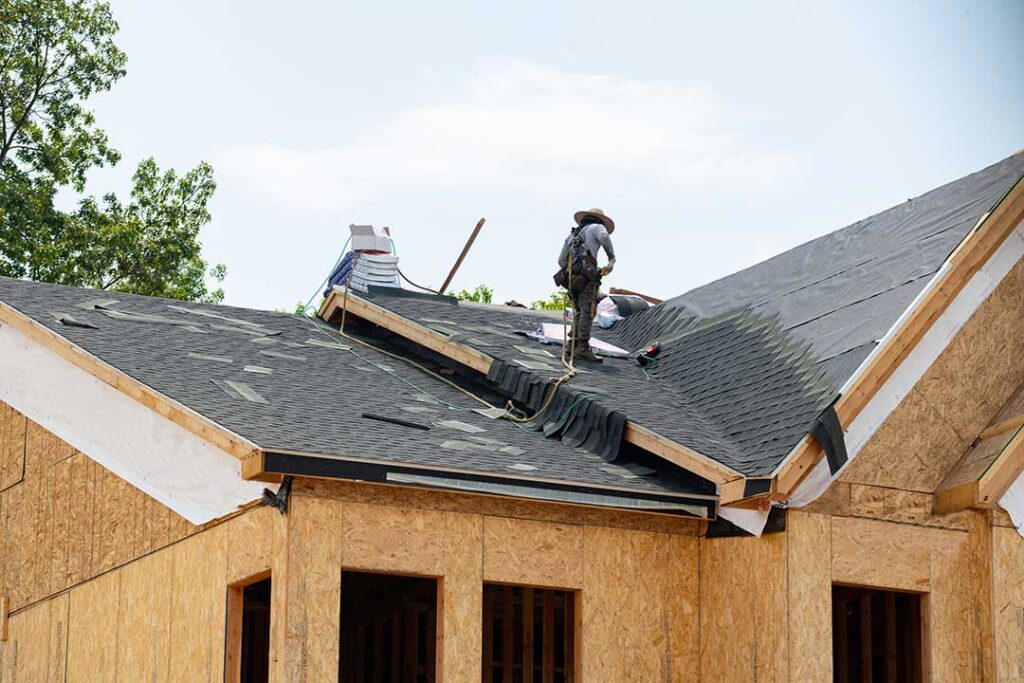
What is a roof valley?
A roof valley is the channel where two sloping roof sections meet. It collects rainwater, melting snow, and ice runoff, then directs that water toward a gutter or another drainage point.
Because valleys handle concentrated water flow, they are among the most vulnerable parts of a roof. A small defect that might remain harmless on a flat section can allow substantial moisture into the roof assembly when it occurs in a valley.
Homes in Troy, NY commonly experience repeated freeze-thaw cycles, heavy rain, wind, snow, and ice buildup. Those conditions can expose weak flashing, loosen roofing materials, and cause water to move beneath shingles.
What does a failing roof valley look like from the ground?
Some warning signs are visible without climbing onto the roof. A valley may be failing if it shows:
- Missing, lifted, cracked, or uneven shingles along either side of the channel
- Exposed metal flashing or underlayment
- Dark stains, rust-colored marks, or streaks below the valley
- Sagging roof edges, soffits, or fascia near the lower end of the valley
- Excessive granules collecting in gutters below the valley
- Water dripping from the roof edge during rain even though gutters appear clear
- Snow or ice remaining in an unusual ridge along one section of the valley
- Patches that look newer or noticeably different from the surrounding roof
A valley does not need to look severely damaged to leak. Shingles can appear intact while flashing underneath has corroded, shifted, or separated.
Binoculars can help with a ground-level inspection, but they do not show every problem. Avoid climbing a roof covered with moisture, frost, snow, or steep slopes.
Which roof valley defects are most common?
The most frequent problems involve the materials that guide water through the valley and the way nearby shingles overlap them.
Damaged or displaced shingles
Shingles bordering a valley may curl, crack, slide downhill, or lose their seal. High winds and repeated temperature changes can weaken the adhesive strips that help keep shingles in place.
A few displaced shingles can create openings where water travels sideways beneath the roofing rather than flowing down the visible surface.
Corroded or exposed flashing
Metal flashing is often installed beneath or between roofing layers to create a water-resistant path. Rust, holes, lifted edges, and open seams can allow water into the roof deck.
Minor surface discoloration is not always an emergency, but active corrosion, perforation, or separation deserves close attention.
Debris accumulation
Leaves, twigs, and windblown material can collect in valleys, especially where roof sections meet at a shallow angle. Debris holds moisture against shingles and may obstruct runoff.
In older or densely wooded parts of the community, seasonal leaf buildup can make this problem more noticeable. Clearing debris from the ground or from a safely accessible edge may help, but scraping roofing materials can cause additional damage.
Poorly sealed intersections
A valley may connect with a chimney, wall, skylight, dormer, or roof edge. These intersections require careful flashing. Gaps, failed sealant, or improperly layered materials can cause leaks that appear to come from the valley even when the actual defect is nearby.
What signs might appear inside the house?
Interior evidence often appears after water has already entered the roof system. Check the attic, upper ceilings, and walls near roof intersections for:
- Brown or yellow ceiling stains
- Damp insulation
- Darkened roof sheathing
- Soft or deteriorated wood
- Peeling paint or bubbling drywall
- Musty odors
- Mold-like spotting
- Drips or dampness during rain or snowmelt
Water does not always appear directly below the exterior defect. It can travel along rafters, roof decking, insulation, or framing before reaching the ceiling. For that reason, an indoor stain may be several feet away from the valley that is allowing water inside.
A dry ceiling does not prove that the valley is sound. Some leaks occur only during wind-driven rain, rapid snowmelt, or particular weather directions.

How can seasonal weather expose valley problems?
Roof valleys are especially stressed during transitions between freezing and thawing weather.
Snow can accumulate in valleys because they collect runoff from two roof planes. As temperatures rise, melting water may flow beneath snow or ice and reach a weak point in the flashing. If nighttime temperatures fall again, the water can freeze and expand gaps.
Ice dams may also form near the lower edge of a valley when heat escapes into the attic or when snow melts unevenly. An ice dam is not always caused by a valley defect, but it can reveal weaknesses that ordinary rainfall does not expose.
Heavy summer rain creates a different challenge. A clogged valley or undersized drainage path may overflow beneath shingles or toward nearby walls. Wind-driven rain can also push water under lifted shingle edges.
Can roof valleys leak without obvious damage?
Yes. A valley can leak even when the shingles look reasonably flat and complete.
Some less visible causes include:
- Deteriorated underlayment beneath the shingles
- Fasteners placed too close to the valley channel
- Flashing that was cut, folded, or layered incorrectly
- Nails backing out because of wood movement or temperature changes
- Roofing materials that have reached the end of their service life
- A drainage design that sends too much water into one narrow area
- Previous repairs that trapped water instead of directing it away
The location of an interior stain can also be misleading. A roof leak should be traced through the attic and roof assembly rather than judged only by the spot where water becomes visible indoors.
What can homeowners safely inspect?
A basic visual check from the ground can be useful twice a year and after severe weather. Look for changes in the valley, nearby shingles, gutters, and interior ceiling areas.
From inside the attic, use a flashlight to look for darkened wood, water marks, damp insulation, or daylight entering through the roof. Do not step directly on insulation or ceiling drywall. Use stable framing only if the space can be entered safely.
Do not walk on a wet, icy, steep, or snow-covered roof. Roof surfaces can be slippery even when they appear dry, and valleys may be more hazardous because their slopes direct foot traffic toward a narrow channel.
If water is actively entering the home, protect belongings, place a container beneath the drip, and keep clear of electrical fixtures or wet wiring. A ceiling that is bulging from trapped water may require prompt attention because it can fail suddenly.
When does a valley problem require urgent attention?
Prompt action is appropriate when there is active interior leaking, exposed roof decking, a large opening, substantial sagging, or a valley that has been damaged by wind or fallen branches.
The need is also more immediate when moisture is near electrical components, when insulation is saturated, or when a roof defect is allowing repeated water entry during changing weather.
A small stain that has remained dry may not indicate an emergency, but it should not be ignored. Repeated wetting can damage sheathing, framing, insulation, and interior finishes long before the problem becomes obvious from the ground.
The key question is not simply whether a valley looks worn. It is whether water is still being directed cleanly over the roof surface and away from the underlying structure. A valley that is clear, properly layered, firmly secured, and free of active moisture is performing its essential job. A valley with gaps, movement, pooling debris, or interior staining deserves closer evaluation before the next cycle of heavy rain, snow, and freezing temperatures.
