
Hanging lights along a roofline can make a home feel welcoming, but the work combines several hazards: ladders, slippery surfaces, electricity, wind, and potential damage to roofing materials. In Troy, NY, late-fall temperatures, damp conditions, snow, and freeze-thaw cycles make timing and attachment methods especially important.
The safest approach is to decorate from the ground or a properly positioned ladder whenever possible. Avoid walking on the roof unless the surface is specifically designed for safe access and conditions are completely dry, clear, and stable.
What should be checked before hanging roof lights?
Inspect the roof edge, gutters, lights, ladder, and electrical equipment before beginning. Do not start if rain, frost, snow, ice, strong wind, or poor visibility creates unstable working conditions.
Look for:
- Loose or damaged shingles
- Sagging gutters or downspouts
- Soft, deteriorated, or slippery roof edges
- Overhead electrical lines near the work area
- Cracked light sockets, exposed wires, bent plugs, or missing insulation
- Extension cords with cuts, crushed sections, or damaged ends
- A ladder with cracked rails, bent parts, worn feet, or loose hardware
A roofline should not be used as an attachment point if the fascia, gutter, trim, or shingles are already loose. Lights can add pulling force when wind moves them, and that force may worsen an existing problem.
Are roof lights safe to install from a ladder?
A ladder is generally safer than standing on a sloped roof, but only when it is placed and used correctly. Set it on level, firm ground rather than soil, ice, wet grass, boxes, or improvised supports.
For an extension ladder:
- Position the base about one foot away from the wall for every four feet of working ladder height.
- Extend the side rails above the upper landing area when the ladder is being used to step onto a level surface.
- Keep three points of contact while climbing.
- Face the ladder and keep the body between the side rails.
- Do not lean sideways to reach the next section of roofline.
- Have another adult stabilize the ladder when practical, especially on uneven ground.
- Move the ladder instead of stretching or “walking” it while occupied.
- Use a tool belt, bucket, or hand line rather than carrying bulky decorations while climbing.
Never place a ladder on top of a roof, gutter, porch railing, snowbank, or other elevated surface. Do not use a metal ladder near electrical conductors. A nonconductive ladder reduces, but does not eliminate, electrical risk.
If the highest portions of the roof cannot be reached while maintaining stable footing and three-point contact, the layout should be changed rather than the ladder pushed beyond its safe working range.
Should anyone walk on the roof to hang lights?
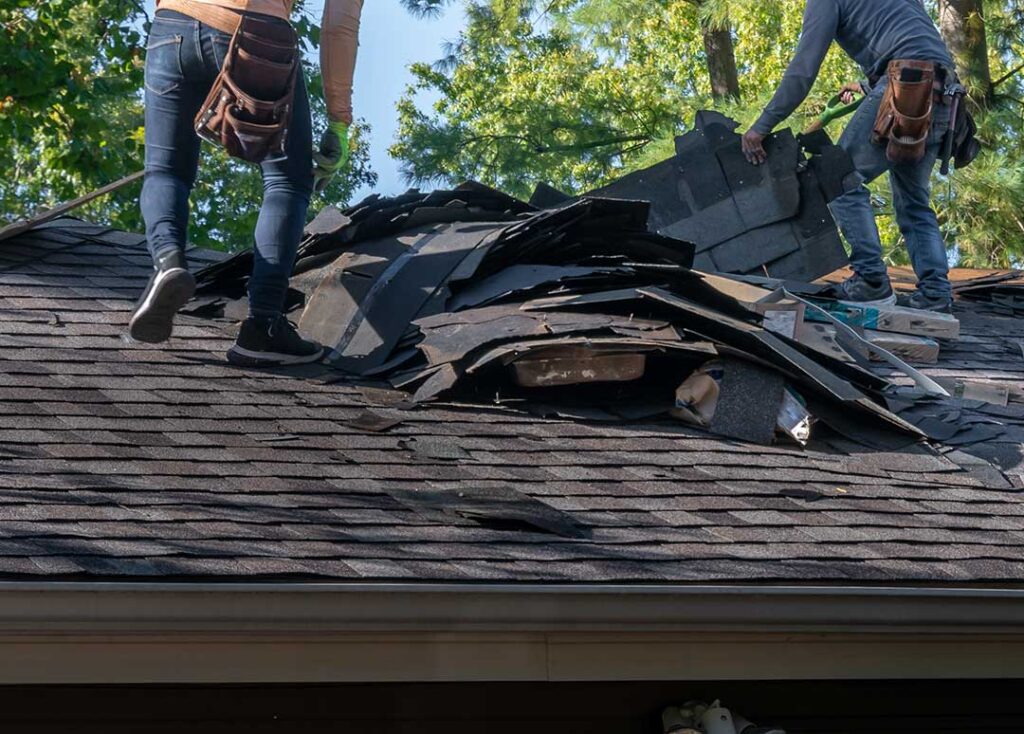
Most seasonal roofline lighting does not require walking on the roof. Walking on shingles can cause falls and may loosen, crack, or displace roofing materials. Asphalt shingles can also become brittle in cold weather and unusually slippery when damp.
Avoid roof access when:
- The roof is wet, icy, frosted, snow-covered, or covered with leaves
- The pitch is steep or the roof has multiple levels
- The surface is brittle, damaged, or visibly loose
- There are skylights, fragile roofing panels, or concealed openings
- The work requires carrying long strings of lights or large decorations
- No fall-protection system or second person is available
A roof that appears dry from the ground may still hold moisture in shaded areas, valleys, or along north-facing slopes. In the Troy area, changing temperatures can create thin ice or damp surfaces even when nearby pavement appears clear.
How should lights be attached without damaging the roof?
Use clips designed for the type of light strand and the edge being decorated. Clips should grip the gutter lip, fascia, eave edge, or another firm surface without puncturing roofing materials.
Avoid:
- Nails, staples, screws, or sharp fasteners through shingles
- Drilling into flashing or drip edges
- Pinching wires beneath shingles
- Hanging heavy decorations from gutters
- Pulling light strands tightly across corners
- Using tape as the primary support in cold or wet weather
- Attaching lights to loose gutters or fragile trim
Do not place weight on gutter guards, thin aluminum edges, ridge vents, plumbing vents, or roof-mounted equipment. A light strand should hang with enough slack to accommodate wind and temperature changes, but not so much that it can drag, snag, or reach walkways.
At corners and transitions, use gentle curves rather than sharp bends. Secure the strand often enough to prevent long sections from swinging in the wind. Wind movement can fatigue wires, loosen clips, and pull at fascia boards.
What type of lights and cords are suitable outdoors?
Use lighting marked for outdoor use, along with outdoor-rated extension cords that are appropriate for the electrical load and weather exposure. Indoor-only lights and cords are not suitable for a roofline.
Before installation, check that:
- The light set is intended for outdoor conditions.
- Plugs and sockets are dry and intact.
- The cord is rated for the power demand.
- Connections are kept off the ground and away from standing water.
- A ground-fault circuit interrupter protects the outdoor outlet.
- Multiple strands are connected only as allowed by the light manufacturer.
- Cords are routed away from doors, driveways, snow-removal paths, and places where they may be pinched.
A ground-fault circuit interrupter can shut off power when it detects current flowing along an unintended path. It is a valuable safeguard, but it does not make damaged lights or unsafe wiring acceptable.
Do not overload an outlet or extension cord. Flickering, warm plugs, buzzing, a burning smell, or repeated tripping indicates that the setup should be unplugged and inspected.
When should roof lights be removed?
Remove lights before they become buried in snow, trapped by ice, or repeatedly battered by strong wind. Seasonal lighting is not intended to remain in place indefinitely unless every component and attachment method is specifically suited to extended outdoor exposure.
Unplug lights before adjusting, removing, or repairing them. Do not pull on the cord to remove a clip, and do not use frozen wires as handles. Let ice thaw naturally rather than chipping it off against shingles, gutters, or plastic sockets.
After removal, allow equipment to dry before storage. Coil cords loosely, separate damaged strands, and label outdoor-rated equipment for future use. Any light set with exposed conductors, melted plastic, cracked insulation, or heat damage should be discarded rather than repaired with makeshift coverings.
When is the safest choice not to do the work yourself?
A setup should be postponed when the roof is icy, the ladder cannot be placed securely, electrical lines are nearby, or the highest sections cannot be reached without stepping onto a hazardous surface. The same applies when the roof has visible damage or when attaching lights would require penetrating roofing materials.
Decorating can usually be planned around the roof’s safer access points. Ground-level shrubs, porch features, windows, railings, and lower eaves may provide a festive appearance without creating unnecessary fall or roof-damage risks.
