

What roof work is usually safe for a homeowner?
In Troy, NY, some roof-related tasks can be handled safely from the ground or from a properly positioned ladder. Minor maintenance is generally more suitable for do-it-yourself work than repairs that require walking on the roof, removing roofing materials, or changing the roof’s structure.
Reasonable homeowner tasks may include:
- Looking at the roof from the ground with binoculars
- Clearing leaves from gutters while standing on stable ground or a properly placed ladder
- Removing small amounts of debris from a low, accessible roof edge
- Replacing a damaged downspout section
- Checking attic insulation and ventilation from inside the house
- Replacing a missing gutter screen, if the work can be done without reaching sideways from a ladder
- Photographing visible damage for documentation
The safest DIY roof work often involves observation, drainage maintenance, and minor repairs at ground level. A task becomes substantially more hazardous when it involves a sloped surface, loose shingles, wet materials, snow, ice, or a fall distance that could cause serious injury.
When should roof work not be done yourself?
Roof work should not be treated as a DIY project when safe fall protection, specialized equipment, or structural knowledge is required. Avoid climbing onto the roof if any of the following conditions exist:
- The roof is wet, frosted, icy, or covered with snow
- Wind is strong enough to affect balance or lift materials
- The roof has a steep slope
- The surface is mossy, brittle, soft, or visibly sagging
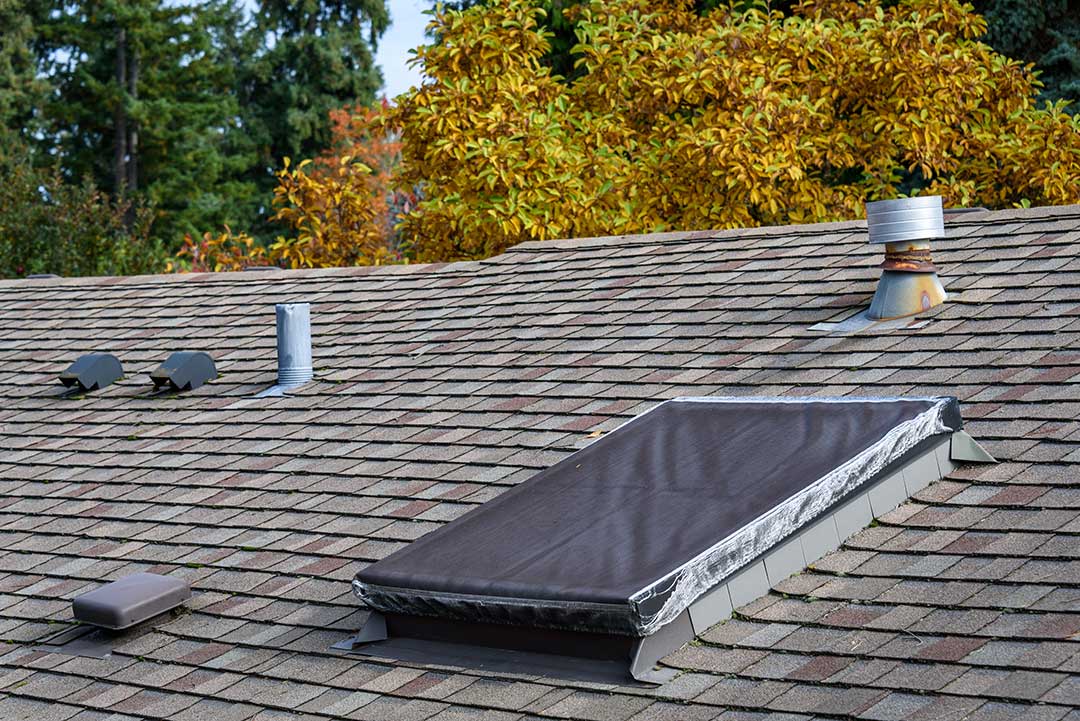
- There are skylights, roof openings, fragile panels, or loose sections
- The work requires stepping near an unprotected edge
- The roof is more than one story above the ground
- You would need to carry bulky materials up a ladder
- You are uncomfortable using the necessary fall-protection equipment
- The repair involves electrical lines, chimneys, structural framing, or suspected water damage
Winter conditions deserve particular caution in the local area. Snow can conceal weak decking, ice dams, damaged flashing, and roof edges. Even after the snow appears to have melted, shaded sections may remain slippery. Cold temperatures can also make shingles brittle and reduce traction.
Is it safe to inspect a roof without climbing on it?
Yes. A ground-level inspection is often the safest first step, especially after a storm or a winter thaw. Use binoculars to look for missing shingles, lifted edges, exposed underlayment, sagging areas, damaged flashing, or debris collecting in valleys.
From inside the attic, look for:
- Damp insulation
- Dark stains on roof decking
- Daylight visible through the roof
- Drips or dampness around chimneys, vents, and valleys
- Musty odors that appear after rain
- Frost or excessive condensation during cold weather
An attic inspection can help identify moisture problems without placing anyone on the roof. However, water stains do not always appear directly below the source of a leak. Water may travel along rafters or roof decking before entering the living space.
Can a homeowner safely use a ladder for roof maintenance?
A ladder can be appropriate for limited work, but it must be used carefully. Set it on firm, level ground, keep the base clear of ice and debris, and maintain three points of contact while climbing. The ladder should extend sufficiently above the landing area when used to access a roof edge, and it should be secured so it cannot shift.
Never place a ladder on top of another object to gain height. Avoid leaning sideways to reach gutters or roof edges. Climb down and reposition the ladder instead.
A ladder is not a substitute for a safe roof-access system. Standing on the top rungs, carrying tools in both hands, or working alone increases the risk of a fall. Keep children and other household members away from the work area, and do not leave an unsecured ladder in place.
What minor roof repairs may be suitable for DIY work?
A homeowner with the right tools and experience may be able to handle a very small repair on a low-slope, easily accessible roof during dry, calm weather. Examples include replacing a small section of gutter, securing a loose gutter bracket, or applying a manufacturer-approved sealant to a minor exterior joint that can be reached safely.
Shingle replacement is more complicated than it appears. A proper repair may require matching the existing roofing material, lifting surrounding shingles without breaking them, replacing damaged underlayment, and fastening the new shingle correctly. Poor placement can allow wind-driven rain to enter beneath neighboring shingles.
Roof cement or sealant should not be used as a universal solution. It may temporarily cover a symptom while leaving damaged decking, flashing, or underlayment unaddressed. Repeatedly applying sealant can also make a later repair more difficult.
When does a repair become a structural or technical problem?
A roof problem is no longer a simple maintenance task when the cause may involve the roof deck, rafters, trusses, flashing system, ventilation, or water intrusion. Warning signs include sagging roof lines, soft spots, recurring leaks, ceiling stains that grow after storms, and damage around chimneys or wall intersections.
Ice dams are another example. Removing visible ice from the roof can damage shingles or gutters and may place a person on an icy surface. The underlying problem may involve heat loss, insulation, air leakage, ventilation, or drainage. Chopping at the ice with a tool can create additional roof damage.
Roof replacements and structural alterations also involve code requirements. New York’s residential building standards address roof design, snow loads, materials, ventilation, and structural changes. A homeowner planning major work should verify whether a permit, inspection, or specific construction method applies before removing existing roofing.
What weather conditions are safest for roof work?
Dry, calm weather is safest, but temperature also matters. Shingles may become brittle in cold weather and can be damaged when bent. On very hot days, roofing surfaces can become uncomfortable and slippery, while heat can increase fatigue and reduce concentration.
Avoid roof work during:
- Rain or active snowfall
- Freezing temperatures with frost or ice
- Strong winds or sudden gusts
- Thunderstorms
- Rapid weather changes
- Conditions where wet leaves or debris cover the walking surface
After a storm, wait until surfaces are dry and stable before attempting even minor exterior maintenance. A roof may look intact from the ground while still having loose materials or hidden structural damage.
How can a homeowner decide whether DIY work is reasonable?
Use a simple test: if the task can be completed from the ground or from a securely positioned ladder, without stepping onto a sloped roof and without disturbing the roof covering, it may be suitable for careful DIY maintenance.
If the work requires climbing onto the roof, carrying materials, removing shingles, cutting openings, repairing structural components, or working near electrical hazards, the risk is much higher. A fall from a residential roof can cause severe injury even when the roof is relatively low.
The safest decision is based less on confidence and more on the actual hazards. A homeowner may be capable of replacing a gutter bracket but not safely equipped to repair a roof valley. In a climate with snow, ice, freeze-thaw cycles, and occasional wind damage, knowing where that boundary lies is an essential part of responsible home maintenance.
