
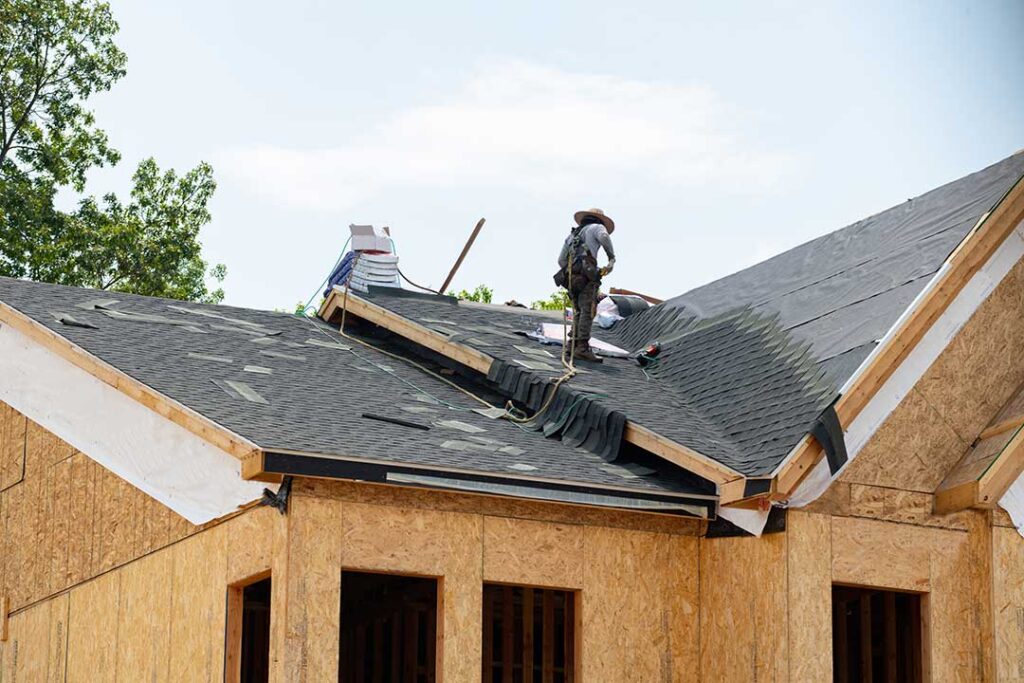
A roof can look fine and still have a problem
A roof does not need to show an obvious hole or dramatic leak to need attention. Water can enter through small weaknesses around flashing, vents, chimneys, skylights, or roof edges and remain hidden for weeks or months.
Some problems first appear indoors as:
- Brown or yellow ceiling stains
- Peeling paint near upper walls
- Damp insulation
- Musty odors in an attic
- Streaks or discoloration around vents
- Warped wood or soft sheathing
A dry ceiling does not always prove that the roof is sound. Leaks may occur only during wind-driven rain, melting snow, or particular wind directions. In a climate like Troy’s, changing seasons can expose weaknesses that remain unnoticed during mild weather.
Does an old roof always need immediate replacement?
No. Age is useful information, but it does not determine the roof’s condition by itself.
A roof’s service life depends on several factors:
- Material quality and installation
- Attic ventilation and moisture control
- Exposure to sun, wind, ice, and snow
- Previous repairs
- The slope and complexity of the roof
- Whether water has collected near valleys or roof edges
An older roof with sound decking, intact flashing, and no active leaks may still be serviceable. On the other hand, a relatively young roof can develop serious problems if it was poorly ventilated, damaged by weather, or installed over a weak surface.
The more useful question is not simply, “How old is the roof?” It is, “What condition are the roof covering, flashing, drainage paths, and supporting materials in?”
Are roof leaks always directly above the ceiling stain?
Usually not. Water often travels along roof decking, rafters, insulation, or framing before appearing indoors. A ceiling mark may be several feet away from the point where water entered.
This is especially common around:
- Roof valleys
- Chimneys and other masonry features
- Plumbing vent openings
- Dormers
- Skylights
- Wall intersections
- Areas where two roof slopes meet
A surface patch over the stain may hide the symptom without correcting the entry point. Tracking a leak requires considering the roof slope, weather conditions, attic evidence, and nearby penetrations.
Does replacing a few shingles fix every roof problem?
Not necessarily. Individual damaged shingles can sometimes be replaced, but shingles are only one part of a roofing system.
A roof also includes:
- Underlayment
- Flashing
- Drip edges
- Ventilation components
- Valleys and drainage paths
- Roof decking
- Seals around penetrations
If a leak is caused by failed flashing or deteriorated decking, replacing visible shingles may not solve it. Likewise, if wind lifts several shingles but also loosens surrounding materials, a small repair may need to include a wider area.
The right repair depends on the source and extent of the problem, not just on the most visible damage.
Are dark roof streaks always mold?
No. Many dark streaks are caused by airborne algae that grows on damp roofing materials. They may look like dirt, mold, or soot, but appearance alone cannot identify the cause.
Algae is more likely on roof areas that receive less direct sunlight or stay damp longer. It may affect appearance without immediately reducing the roof’s protective function. Aggressive cleaning, however, can damage shingles by removing protective surface material or loosening granules.
Moss is different because it can hold moisture against the roof and sometimes lift or disturb shingles as it grows. Any cleaning method should account for the roofing material, slope, surrounding vegetation, and runoff.
Does more attic insulation solve roof ventilation problems?
Not by itself. Insulation and ventilation address different parts of attic performance.
Insulation slows heat transfer between the living space and the attic. Ventilation helps manage heat and moisture within the attic when the system is properly designed. Adding insulation without preserving airflow at the roof edges can block ventilation channels and contribute to moisture accumulation.
Poor attic conditions may lead to:
- Frost or condensation in cold weather
- Damp insulation
- Mold-like odors
- Peeling interior paint
- Premature deterioration of roof materials
- Ice buildup along roof edges
A balanced system generally requires clear intake airflow near the lower roof edges and suitable exhaust airflow higher on the roof. More vents do not automatically improve performance if the airflow paths are blocked or poorly arranged.
Do ice dams mean the roof itself is defective?
Not always. Ice dams usually result from uneven roof temperatures, snow cover, heat loss from the living space, and limited drainage. They can occur on roofs that have other problems, but their presence does not by itself prove that the shingles failed.
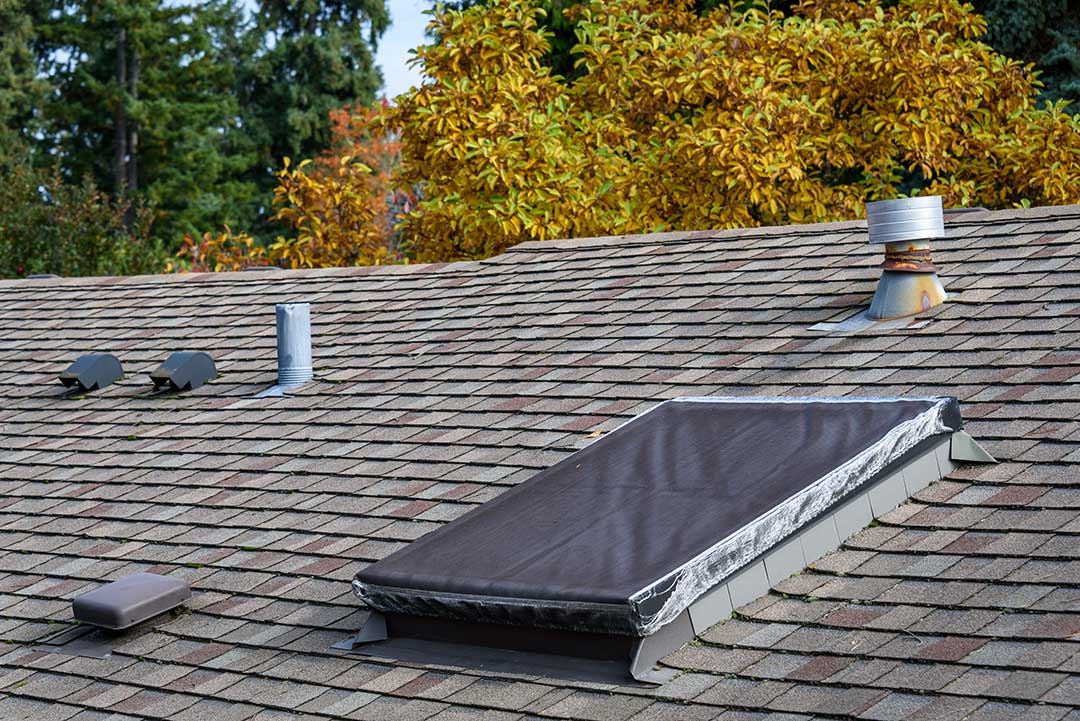
An ice dam forms when snow melts on a warmer upper portion of the roof and refreezes near a colder edge. The resulting ice can obstruct water and allow it to move beneath roofing materials.
Reducing the risk often involves improving the relationship between:
- Attic insulation
- Air sealing
- Ventilation
- Roof geometry
- Snow accumulation
- Gutter and roof-edge conditions
Removing visible ice without addressing heat loss or moisture movement may provide only temporary relief. Chopping ice with tools can also damage shingles and flashing.
Can gutters prevent every roof leak?
No. Gutters move water away from roof edges and foundations, but they do not replace sound roofing, flashing, or underlayment.
A roof can leak even when gutters are clean if water enters around a vent, valley, chimney, or damaged section of roofing. Conversely, clogged or poorly positioned gutters can contribute to overflow, fascia damage, basement moisture, and erosion near the foundation.
In Troy, seasonal debris, freezing temperatures, and winter precipitation can make drainage maintenance more complicated. Gutters should be checked for sagging, blocked outlets, loose connections, and water discharge that remains too close to the building.
Is a roof inspection needed only after a storm?
No. Storm damage is one reason to inspect a roof, but it is not the only one.
Periodic checks are useful after:
- Strong wind
- Hail
- Heavy snow or rapid thawing
- Fallen branches
- Extended periods of freezing and thawing
- Interior signs of moisture
- Nearby construction or tree removal that changes exposure
Some damage is visible from the ground, such as missing shingles, exposed underlayment, or displaced metal. Other damage may be hidden and unsafe to investigate without proper access. Walking on a steep, wet, icy, or damaged roof creates a fall hazard and can cause additional damage.
Does a roof replacement always require removing everything down to the framing?
No. The required level of removal depends on the condition of the existing roof system and applicable building requirements.
In some circumstances, an additional layer of roofing may be allowed over an existing layer. That does not make it appropriate in every situation. Extra layers can conceal deteriorated decking, add weight, complicate flashing, and make future repairs more difficult.
Removal may be necessary when there are:
- Multiple existing roof layers
- Widespread leaks
- Soft or rotted decking
- Significant shingle failure
- Damaged flashing
- Evidence of trapped moisture
- Problems that cannot be evaluated through the existing covering
The condition beneath the visible roof matters as much as the surface appearance.
What is the most useful way to think about roof maintenance?
Roof maintenance is less about reacting to one dramatic leak and more about recognizing how the entire system handles water, air, temperature, and movement.
For area households, useful habits include observing the roof from the ground, keeping drainage paths clear, checking the attic for moisture signs, and documenting changes after severe weather. Repairs should address the source of a problem rather than only the interior stain or missing shingle.
When a roof is steep, icy, structurally damaged, or showing signs of widespread deterioration, safety and accurate diagnosis matter more than attempting a quick do-it-yourself fix.
