
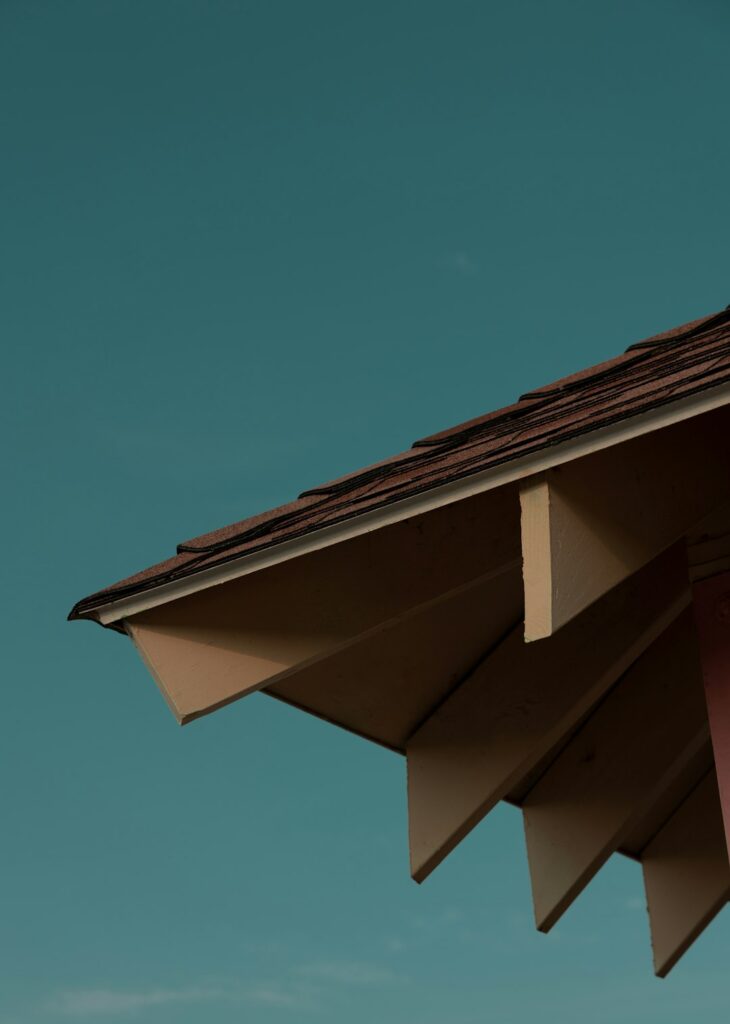
Soffits and fascia are the finished components along a roof’s lower edge. They help protect the roof and walls from water, support ventilation, and give the eaves a clean, finished appearance. Although these parts are easy to overlook from the ground, damage to either one can contribute to moisture problems, pest entry, poor attic airflow, and premature roof deterioration.
What are soffits and fascia?
A soffit is the underside of a roof overhang. Standing near a house and looking upward beneath the eaves, the soffit is the horizontal or slightly sloped surface that bridges the exterior wall and the roof edge.
Fascia is the vertical board or trim installed along the roofline. It commonly sits behind the gutter and covers the ends of the roof rafters or trusses. The fascia often provides the surface where gutters are secured.
These components may be made from wood, aluminum, vinyl, engineered wood, or other exterior materials. The material affects maintenance needs, but proper installation and water control matter just as much.
What does a soffit do?
A soffit has both a protective and an airflow-related function.
The overhang helps keep rain and melting snow away from the upper wall, window trim, and foundation-side areas. A properly installed soffit closes the open space beneath the roof while still allowing the roof assembly to be ventilated when vented soffit panels are used.
Many soffits contain narrow perforations or screened openings. These are intake vents. Air enters at the lower edge of the roof and moves through the attic toward higher exhaust vents, such as ridge or gable vents. This airflow can help manage heat and moisture in a vented attic.
Soffit vents only work if the air channel above them remains open. Insulation pushed tightly into the eaves can block airflow. In older houses, built-up paint, insect nests, dust, and replacement siding may also cover or restrict the openings.
What does fascia do?
Fascia protects the roof edge and the ends of the framing from direct exposure to rain, snow, ice, and sunlight. It also creates a finished transition between the roof, soffit, siding, and gutters.
Because gutters are commonly fastened to or near the fascia, this board must remain solid. Wood that has softened from repeated wetting may no longer hold gutter fasteners securely. A sagging gutter can then pull farther away from the roof edge, allowing water to spill against the siding or collect near the foundation.
Fascia is not a substitute for roof flashing. Flashing directs water around roof joints, walls, chimneys, and other penetrations. Fascia helps protect the edge, but it cannot correct a leak caused by missing, damaged, or improperly installed flashing.
Why are soffits and fascia especially relevant in Troy, NY?
The local roof edge experiences repeated seasonal stress. Winter snow, freeze-thaw cycles, wind-driven rain, spring thaw, summer humidity, and falling leaves all affect these materials.
Ice can build along the eaves during periods of uneven roof temperatures. Although soffits and fascia do not create ice dams, blocked ventilation and inadequate insulation can contribute to roof temperature differences that make ice-related problems more likely.
Older housing in the community may also have several generations of repairs. A house could have original wood fascia, replacement gutters, newer siding, and partially blocked soffit vents. These systems need to work together. Improving one component without checking the others can leave water or airflow problems unresolved.
Dense neighborhoods and mature trees create additional maintenance concerns. Leaves can collect in gutters, branches can rub against trim, and shaded areas may dry slowly after rain or snow.
How can a homeowner tell if soffits or fascia are damaged?
Some warning signs are visible from the ground, while others are easier to notice from the attic or during gutter maintenance.
Look for:
- Peeling paint, dark stains, or swollen areas on wood trim
- Soft spots, crumbling edges, or visible holes
- Fascia that bows away from the roofline
- Gutters pulling loose or sagging between fasteners
- Gaps where birds, insects, squirrels, or bats could enter
- Missing, cracked, or detached soffit panels
- Water stains on the exterior wall below the eaves
- Small piles of sawdust or insect debris near damaged wood
- Condensation, frost, or musty odors in the attic
- Insulation packed tightly against soffit vents

A small paint failure does not always mean the entire roof edge needs replacement. The cause may be a gutter leak, a failed drip edge, roof runoff, or a recurring wet area that must be corrected before new trim will last.
Do soffit vents prevent attic moisture?
Soffit vents can support attic ventilation, but they do not solve every moisture problem by themselves.
A vented attic needs a balanced path for air movement. Intake openings near the eaves should work with exhaust openings higher on the roof. Air sealing at the ceiling level is also important because warm, moist household air can enter the attic through gaps around light fixtures, plumbing penetrations, hatches, and wiring.
Bathrooms and kitchens should exhaust outdoors through properly routed ventilation ducts, not into the attic. Otherwise, moisture may accumulate even when soffit vents are open.
Adding more vents is not automatically an improvement. Poorly balanced ventilation, blocked channels, or openings that allow wind-driven rain and snow to enter can create new problems. The design of the entire roof and attic assembly matters.
What maintenance do soffits and fascia need?
Routine observation is usually more useful than frequent alteration.
During spring and fall maintenance, check that gutters are not overflowing and that downspouts discharge water away from the foundation. Overflowing gutters can soak fascia repeatedly and may leave staining beneath the eaves.
Keep tree limbs from rubbing against the roof edge. Do not cover soffit perforations with paint or sealant. If screens are damaged, they may need repair to keep insects and animals out without blocking airflow.
Wood trim should be kept properly painted or sealed, especially at joints and end grain. Vinyl and aluminum require less painting but can still crack, loosen, or deform. Fasteners may also loosen after years of wind and temperature changes.
A ladder should be placed on stable ground, and roof-edge work should not be attempted from an unsafe position. Hidden rot can extend farther than it appears from the ground, and gutters can be unstable.
Can damaged soffits or fascia be repaired?
Sometimes. Localized damage may be repairable when the surrounding framing is dry, sound, and securely attached. A small section of fascia may be replaced, a loose soffit panel may be resecured, or a damaged vent screen may be restored.
Replacement becomes more extensive when the problem involves widespread rot, recurring water entry, detached gutters, insect damage, or deteriorated roof-edge framing. In those cases, covering the area with new trim may hide the damage without stopping it.
Any repair should address the source of moisture first. That may involve correcting gutter slope, replacing failed flashing, improving drip-edge detailing, clearing a blocked vent path, or repairing roof materials above the affected area.
Soffits and fascia are modest-looking parts of a house, but they connect several important systems: roofing, gutters, exterior walls, attic ventilation, and pest control. Keeping these components dry, secure, and unobstructed helps the roof edge perform through the region’s wet seasons, winter weather, and repeated freeze-thaw conditions.
