

Strong wind can damage a roof even when no shingles are missing. Gusts may lift roofing materials, loosen flashing, push rain under protective layers, or break nearby branches that strike the roof. In Troy, NY, wind damage can occur during summer thunderstorms, winter storms, and fast-moving weather systems that produce sudden gusts.
What parts of a roof are most vulnerable to wind?
The most vulnerable areas are roof edges, corners, ridges, penetrations, and locations where two roof surfaces meet. Wind pressure changes as air moves over and around a building, creating uplift that is often strongest along these edges.
Commonly affected components include:
- Shingles, especially older or partially detached shingles
- Ridge caps along the peak of the roof
- Metal flashing around chimneys, vents, and wall intersections
- Drip edges along the lower roof perimeter
- Vent covers, skylights, and roof-mounted equipment
- Gutters, downspouts, and fascia boards
- Soffits beneath roof overhangs
A roof does not need to lose an entire section to develop a serious problem. A single lifted shingle can allow water to reach the underlayment or roof deck during the next rain.
How do severe winds damage asphalt shingles?
Wind commonly affects asphalt shingles by lifting their lower edges or breaking the adhesive seal that holds adjacent shingles together. Once the seal is weakened, later gusts can lift the shingle farther or remove it completely.
Older shingles tend to be more vulnerable because years of sunlight, temperature changes, ice, and moisture can make them brittle. Shingles may also be at greater risk if they were installed improperly, have insufficient fastening, or have already been disturbed by previous repairs.
Visible signs may include:
- Shingles lying in the yard or on decks
- Shingles that appear raised, curled, or uneven
- Exposed dark underlayment or roof sheathing
- Small piles of granules near downspouts
- A row of shingles that no longer appears straight
- Ridge caps that look displaced or cracked
Not every roof problem is visible from the ground. A shingle may remain in place while its fasteners have loosened or its sealed edge has separated.
Can wind cause roof leaks without removing shingles?
Yes. Wind can create leaks even when the roof looks mostly intact. Flashing may lift slightly, sealant may separate, or wind-driven rain may enter through a small opening around a vent or chimney.
High winds can also force water beneath roofing materials. This is more likely when rain is falling nearly sideways, as it can during severe thunderstorms or winter weather. Water may then travel along the roof deck before appearing as a ceiling stain far from the original entry point.
After a storm, watch for:
- New brown or yellow ceiling stains
- Damp attic insulation
- Drips around vents, chimneys, or exterior walls
- Peeling paint or bubbling drywall
- Musty odors in the attic
- Daylight visible through the roof deck
A ceiling stain may not appear until hours or days after the storm. Delayed evidence does not necessarily mean the damage is new.
Why do roof edges and corners experience more damage?
Wind flows over a roof and creates areas of suction, especially near corners and outer edges. These locations experience more stress than the center of the roof surface.
The first rows of shingles along eaves and rakes can be affected because they are near the roof perimeter. Ridge caps are also exposed because they sit at the highest point of the roof. If one section becomes loose, the opening can allow additional wind to get beneath nearby materials.
Attached structures may face extra exposure. Porches, additions, garages, and low-slope sections can have different wind patterns from the main roof. Transitions between old and new construction are also worth watching because flashing and roofing materials may meet at complicated angles.
How can trees and branches make wind damage worse?
Wind does not have to act directly on the roof to cause damage. Branches can scrape shingles, puncture roof coverings, break vents, or strike flashing. A fallen limb may damage the roof deck and supporting framing, even if the visible opening is small.
Troy’s mature neighborhoods and tree-lined residential areas can increase the chance of branch-related damage during storms. Trees that appear healthy may still lose large limbs when saturated soil, strong gusts, or weakened branches combine.
After a storm, do not walk beneath hanging limbs or climb onto a roof near damaged trees. A branch may shift without warning, and electrical hazards may be present if wires are involved.
Does wind damage happen only during severe thunderstorms?
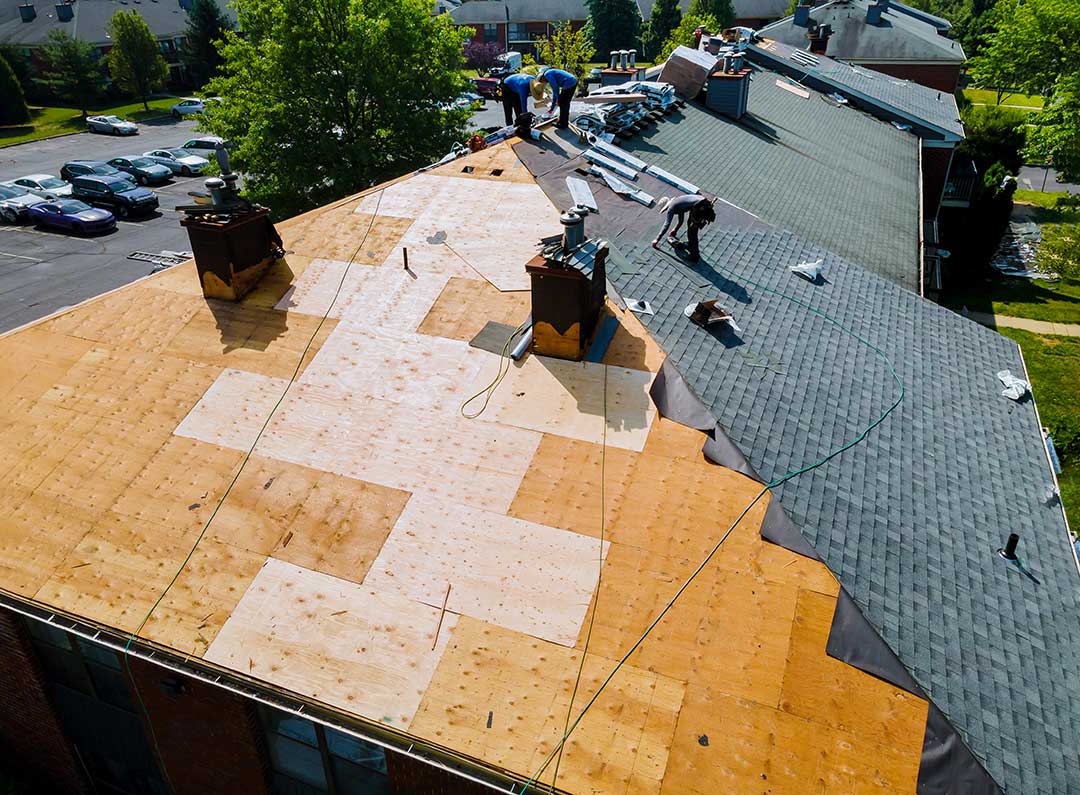
No. Severe thunderstorms are a common source of sudden roof damage, but strong winds can also occur during winter storms, frontal passages, and other rapidly changing weather conditions.
Winter can create a different combination of risks. Snow and ice add weight, while freeze-thaw cycles may weaken materials or expose small openings. Wind then has more opportunity to move loose shingles, flashing, or metal components. Snow can also conceal damaged materials on the roof or hide debris on the ground.
A roof that already has loose shingles or deteriorated flashing may be affected by moderate gusts, even if the wind does not reach severe-storm levels.
What should residents do after a damaging windstorm?
Safety should come before inspection. Look from the ground first and stay away from areas with downed wires, hanging branches, unstable debris, or structural movement.
Useful steps include:
- Photograph visible damage from a safe location
- Check the attic for water, damp insulation, or daylight
- Place a container beneath active indoor drips
- Move furniture and belongings away from wet areas
- Avoid walking on the roof
- Cover a small interior leak only if doing so can be done safely
- Keep records of when the damage was discovered and what the weather was like
A temporary covering may reduce additional water entry, but climbing onto a wet, steep, icy, or damaged roof creates a serious fall risk. Structural damage may also be hidden beneath the roof covering.
How can wind damage be prevented or reduced?
Routine observation helps identify weak areas before a storm exposes them. From the ground, check whether shingles are curling, ridge caps are uneven, or gutters and fascia appear loose.
Other useful maintenance habits include:
- Keep gutters and downspouts clear so water can drain properly
- Trim dead or weak branches away from the roof where legally and safely permitted
- Check attic ventilation and moisture conditions
- Look for cracked or separated flashing around roof penetrations
- Replace visibly damaged roof components before storm season
- Secure loose exterior items that could become airborne debris
New roofing work in New York must meet applicable state building-code requirements, including provisions addressing wind resistance and the connection of roof components to the structure. Code compliance does not make a roof immune to extreme weather, but proper installation and fastening can reduce the chance of avoidable failures.
When is roof damage an emergency?
Immediate attention is warranted when water is entering rapidly, a large portion of the roof is missing, the ceiling is sagging, structural framing is exposed, or a tree has struck the building. Electrical hazards, fire risk, and unstable materials require extra caution.
For minor damage, the main concern is preventing a small opening from becoming a larger leak. Prompt documentation and a safe inspection can help distinguish surface damage from problems involving the roof deck, insulation, framing, or interior finishes.
A roof can appear sound from the street while still needing attention after severe wind. Careful ground-level observation, attic checks, and timely action are the most practical ways to limit secondary water damage.
