

Roofing work can affect a home’s weather protection, ventilation, structure, and insurance documentation. For residents in Troy, NY, choosing a roofing contractor should involve more than comparing prices. A careful decision starts with verifying qualifications, understanding the proposed work, and confirming that the contractor can address the demands of the local housing stock and seasonal weather.
What should be checked before choosing a roofing contractor?
Before discussing materials or price, verify that the contractor is properly established, adequately insured, and willing to explain the work in writing. A trustworthy contractor should be able to provide clear answers without pressure or vague promises.
Useful questions include:
- How long has the business operated under its current name?
- Is the contractor licensed or registered as required for the work involved?
- Can proof of general liability and workers’ compensation insurance be provided?
- Who will perform the roofing work?
- Will subcontractors be used, and if so, who supervises them?
- What types of roofing systems and repairs are commonly handled?
- Can recent local references be provided for similar projects?
Insurance deserves special attention. General liability coverage helps address accidental property damage, while workers’ compensation coverage protects against certain job-related injuries. Homeowners should not assume that a contractor’s verbal statement is sufficient; current documentation is more useful.
How can homeowners compare roofing estimates fairly?
A roofing estimate should describe the scope of work rather than provide only a single total price. Two estimates may appear different because one includes more preparation, better ventilation work, or the removal of several existing layers.
A useful written estimate generally identifies:
- The roofing material and its expected quantity
- Tear-off and disposal procedures
- Underlayment, flashing, drip edge, and ventilation work
- Replacement of damaged decking or structural materials
- Protection for siding, landscaping, windows, and nearby surfaces
- Cleanup and handling of leftover materials
- Labor and material warranties
- Payment timing and any change-order process
- The expected start and completion window
Low bids can be attractive, but they may leave out necessary preparation. For example, an estimate that does not mention flashing around chimneys, roof penetrations, valleys, or wall intersections may not represent the full job. A higher bid is not automatically better, but a detailed bid is easier to evaluate than a short price quote.
Homeowners should also ask whether the price can change if concealed damage is discovered. Roof decking, framing, or moisture damage may not be visible until existing materials are removed. A fair contract explains how such conditions will be documented and priced before extra work proceeds.
What local conditions should a contractor understand?
Troy’s older and varied housing stock can create roofing challenges that are not present on every property. Homes may have additions, intersecting roof sections, older flashing details, steep slopes, limited attic access, or previous repairs using different materials.
Seasonal conditions also matter. Snow, ice, wind, freeze-thaw cycles, and heavy rainfall can expose weak flashing, poor drainage, inadequate ventilation, or deteriorated roof edges. A contractor should inspect more than the visible shingles. The evaluation should include drainage paths, valleys, penetrations, attic ventilation, roof-to-wall transitions, and areas where additions meet the original structure.
Older homes may also require special care around trim, masonry, slate-like materials, historic details, or unusual roof shapes. The correct approach is not always to replace everything with the newest common material. Compatibility with the existing structure and appearance can affect performance and long-term maintenance.
Should a contractor inspect the attic?
Yes. An attic inspection can reveal conditions that are not obvious from the roof surface. Dark stains, damp insulation, mold-like growth, frost, rusted fasteners, or blocked ventilation may indicate moisture problems.
A roof can appear relatively sound while still allowing condensation to build up inside the attic. That moisture may be caused by poor ventilation, air leakage from the living space, bathroom exhaust discharged into the attic, or an active roof leak. Replacing shingles alone may not correct the underlying problem.
A thorough assessment should distinguish between:
- An active leak
- Old staining from a past leak
- Interior condensation
- Damage caused by ice or wind
- Deterioration related to age
- Defects in flashing or roof drainage
This distinction matters because different causes require different repairs.
What warning signs suggest a contractor should be avoided?
Certain behaviors should raise concern before a contract is signed. These include demands for a large cash payment, pressure to decide immediately, refusal to provide insurance information, unusually vague estimates, or claims that an inspection is unnecessary.
Other warning signs include:
- A price far below several comparable written estimates
- A request to sign a blank or incomplete contract
- Unwillingness to identify the materials being proposed
- No explanation of how unexpected damage will be handled
- Promises that a new roof will solve every moisture or ventilation problem
- Statements that permits, inspections, or local requirements never apply
- A request to obtain insurance funds directly without clear documentation
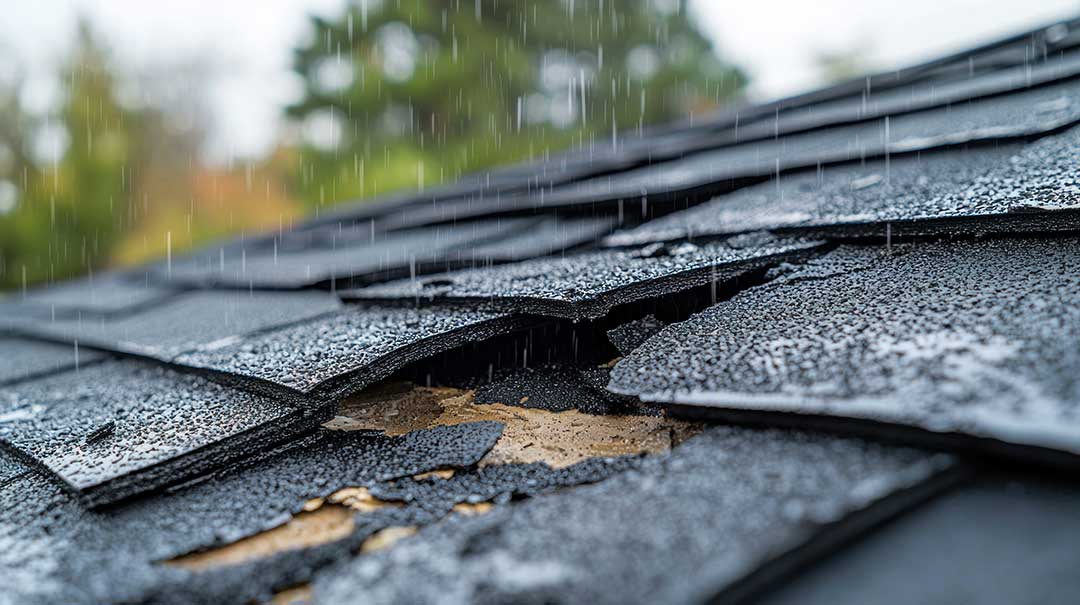
Storm-related work deserves extra caution. After severe weather, temporary crews may appear quickly and use urgency to secure contracts. A homeowner can take photographs, document the date of damage, and avoid signing paperwork before understanding the scope and payment terms.
What should a roofing contract include?
A roofing contract should make the project understandable to someone who was not present during the inspection. It should identify the property, describe the work, state the total price or pricing method, and explain responsibilities on both sides.
The contract should also address:
- Material specifications and color or style selections
- Removal of existing roofing layers
- Decking replacement and unit pricing if needed
- Flashing replacement or reuse
- Ventilation changes
- Cleanup, debris removal, and protection of the property
- Warranty terms and exclusions
- Payment schedule
- Start-date conditions and weather delays
- Procedures for cancellation and changes
A homeowner should receive a complete copy before work begins. Verbal assurances about warranties or repairs are difficult to rely on if they are not included in the written agreement.
Is the cheapest roofing contractor the right choice?
Not necessarily. Roofing cost reflects materials, labor, safety procedures, preparation, disposal, insurance, and the complexity of the structure. A low price may reflect efficient work, but it may also indicate omitted materials, minimal preparation, uninsured labor, or an unrealistic schedule.
A better comparison considers value and risk:
- Is the scope complete?
- Are the materials clearly identified?
- Is the contractor insured?
- Does the work address ventilation and flashing?
- Are payment terms reasonable?
- Is there a clear process for defects or additional damage?
- Does the contractor understand the property’s roof design?
The right choice is usually the contractor whose qualifications, inspection, contract, and communication are most consistent—not simply the one with the lowest number.
When is professional roofing work necessary?
Minor maintenance, such as clearing leaves from accessible gutters or observing roof conditions from the ground, may be reasonable for a homeowner. Roof access becomes hazardous on steep, wet, icy, or deteriorated surfaces, however. Active leaks, sagging areas, exposed decking, damaged structural components, and storm-related openings require prompt evaluation because delays can allow water to reach insulation, ceilings, walls, and electrical components.
For any project involving roof access, structural repairs, complex flashing, or code-related requirements, the contractor’s qualifications and safety practices deserve as much attention as the finished appearance.
