
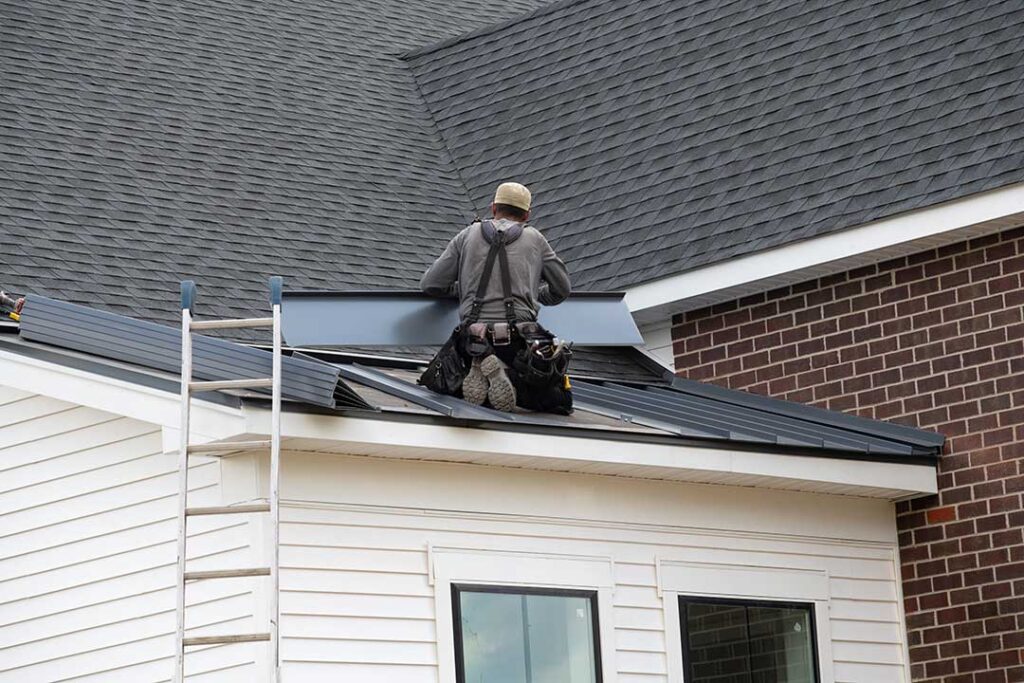
Roof stains are common on homes in Troy, NY, especially after wet weather, shaded periods, and the freeze-thaw cycles of winter. A dark streak or green patch does not always mean the roof is failing, but it can indicate moisture that deserves attention.
What causes dark stains on a roof?
Most dark streaks on asphalt shingles are caused by algae, particularly a type that feeds on moisture and roofing granules. These stains often begin as small marks and gradually spread down the slope of the roof.
Other possible causes include:
- Moss or lichen growth
- Dirt and airborne debris
- Rust from metal flashing, fasteners, or nearby components
- Tree sap and organic material
- Water flowing from a dirty or overflowing gutter
- A roof leak that is allowing moisture beneath the shingles
- Smoke, soot, or residue from nearby chimneys and heating equipment
Algae stains are usually flat and dark gray, brown, or black. Moss tends to look raised, green, or cushion-like. Lichen may appear as pale green, gray, or crusty patches that attach firmly to the shingle surface.
The appearance alone cannot always identify the cause. A stain near a chimney, roof valley, plumbing vent, or flashing deserves closer attention because those areas are common paths for water intrusion.
Are roof stains a sign of a leak?
Not necessarily. Surface algae commonly causes discoloration without immediately creating a leak. However, stains should not be dismissed if they occur with interior warning signs.
Check the attic and upper-floor ceilings for:
- Brown or yellow ceiling marks
- Damp insulation
- Peeling paint
- Soft drywall
- Musty odors
- Water marks around chimneys, vents, or skylights
- Dripping or dampness after rain
A roof can also leak without leaving a visible ceiling stain. Water may travel along rafters, decking, insulation, or framing before appearing indoors. This is why the location of an interior mark may not match the exact location of the roof problem.
If a roof stain is accompanied by active dripping, sagging materials, exposed decking, or electrical fixtures near moisture, keep clear of the area and arrange for a qualified roof inspection. Walking on a steep, wet, icy, or moss-covered roof creates a serious fall risk.
Why are roof stains common in the local climate?
The seasonal conditions in Troy create several opportunities for roof discoloration and biological growth. Spring and fall often bring extended damp periods, while summer humidity can slow drying on shaded roof surfaces. Winter snow, ice, and repeated freezing and thawing can leave roofing materials wet for long periods.
Roof sections that receive limited sunlight are more likely to stay damp. This includes slopes shaded by mature trees, areas near taller buildings, and sections beneath overhanging branches. Debris can hold moisture against shingles and block normal drainage.
Older homes and closely spaced properties may also have roof areas with limited airflow. Narrow roof valleys, dormers, porch connections, and additions can collect leaves and moisture if they are not checked periodically.
Can roof stains be removed safely?
Yes, but the cleaning method matters. The safest approach is to avoid climbing onto the roof unless the surface is low-sloped, dry, stable, and accessible with proper fall protection. Even a thin layer of algae or moss can become slippery.
For minor staining visible from the ground, homeowners can begin with a visual inspection using binoculars. Look for missing shingles, lifted edges, exposed nail heads, damaged flashing, and areas where moss has pushed under shingle edges.
Roof cleaning should not involve aggressive scrubbing or high-pressure washing. These methods can remove protective granules, loosen shingle seals, damage flashing, and force water beneath the roofing material. The damage may not be visible until months later.
Chemical treatments may be used on some roofing materials, but product directions must be followed exactly. Overspray can damage siding, painted surfaces, landscaping, metal, and nearby plants. Protective measures are especially important around rain gutters and downspouts because cleaning runoff can carry treatment chemicals away from the roof.
A gentle, downward-rinsing method is generally less damaging than spraying upward beneath shingle edges. Some stains fade gradually after treatment rather than disappearing immediately.
What should never be used on stained shingles?
Several common cleaning ideas can shorten the life of a roof.
Avoid:
- Pressure washers
- Stiff wire brushes
- Scraping tools that gouge shingle surfaces
- Strong household bleach mixtures used without proper precautions
- Solvents or paint removers
- Walking across wet moss or algae
- Pulling established moss by hand
- Spraying chemicals on windy days
- Cleaning immediately before heavy rain
Moss has root-like structures that can grip the surface and lift shingle edges when pulled away. Removing it forcefully may cause more harm than leaving it temporarily in place while a safer treatment method is planned.
If a roof is steep, more than one story high, visibly deteriorated, icy, or heavily covered with moss, roof cleaning is not a suitable do-it-yourself task.
How can roof stains be prevented?
Prevention focuses on keeping the roof dry, clear, and well-drained.
Trim branches that rub against the roof or block sunlight, while avoiding excessive pruning that could damage the tree. Remove leaves and small branches from valleys and roof edges before they form damp piles.
Gutters and downspouts should be checked regularly, especially after autumn leaf drop and major storms. Water spilling over a clogged gutter can leave vertical stains on shingles, fascia, and siding. Confirm that downspouts direct water away from the foundation and do not discharge directly onto lower roof sections.
Keep nearby roof surfaces clear of accumulated debris. Check around chimneys, vent pipes, dormers, and roof-wall intersections for cracked sealants, damaged flashing, or gaps.
Some roofing systems include algae-resistant features, but no shingle is completely immune to staining. Copper or zinc strips are sometimes used near roof ridges because rainwater can carry small amounts of metal down the roof and discourage biological growth. These products must be installed carefully so they do not damage roofing materials or create unsafe sharp edges.
When does a roof stain require closer evaluation?
A stain deserves prompt attention when it is spreading quickly, has raised moss beneath shingle edges, or appears beside damaged flashing. The same is true when interior moisture, attic dampness, or ceiling discoloration is present.
Roof age also matters. Staining on an older roof may be only cosmetic, but it can also reveal weakened shingles that are already losing granules or flexibility. After a major windstorm, heavy snowfall, or ice event, a roof inspection should focus on both the stained area and nearby flashing, valleys, vents, and edges.
A roof stain is not automatically an emergency, but it is useful evidence. Understanding whether it comes from algae, trapped debris, rust, or water intrusion helps determine whether the next step is routine maintenance, careful cleaning, or repair of a moisture problem.
