
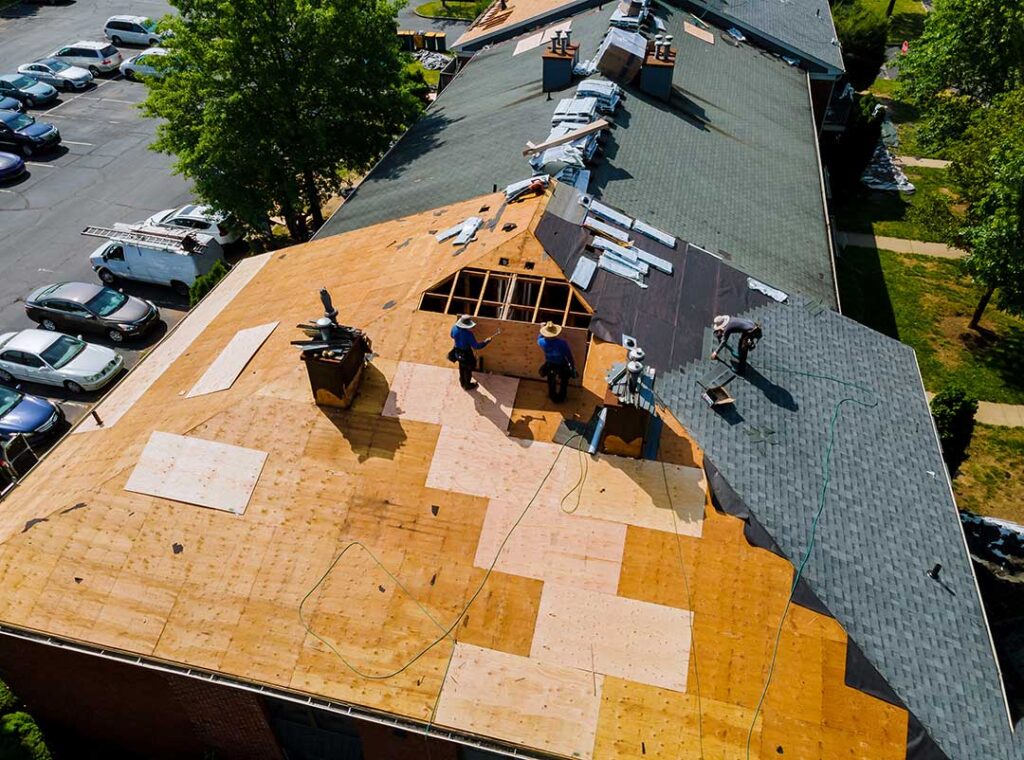
Why small roofing mistakes can become larger problems
Roof repairs often fail because the underlying problem was misunderstood, the repair was rushed, or the work was done under unsuitable conditions. In Troy, NY, roofs must handle heavy rain, freeze-thaw cycles, winter snow, ice, wind, and occasional debris from nearby trees. Those seasonal stresses can expose weak repairs quickly.
A sound repair begins with identifying the source of the damage, not simply covering the most visible symptom. Water stains, missing shingles, lifted flashing, and leaks around chimneys or roof penetrations may be related to problems in another area of the roof.
Mistake 1: Repairing the visible symptom instead of finding the leak source
A ceiling stain does not always appear directly below the point where water entered. Water can travel along roof decking, rafters, insulation, or interior framing before becoming visible indoors.
For example, a stain near an exterior wall could result from:
- Damaged flashing around a vent or chimney
- A failed seal around a pipe penetration
- Missing or cracked shingles several feet uphill
- An ice-related backup along the roof edge
- Water entering near a roof-to-wall transition
Painting over a stain or replacing one nearby shingle may hide the evidence temporarily without stopping the leak. The interior area should be dried and inspected for damp insulation, softened wood, peeling paint, or signs of mold growth. The roof surface should then be examined from a safe location, especially after rain.
Mistake 2: Using roofing materials that do not match
A replacement shingle should be compatible with the existing roof system. Differences in shingle type, thickness, dimensions, exposure, color, and fastening requirements can create both appearance and performance problems.
A mismatched repair may:
- Shed water differently from surrounding shingles
- Lift more easily in strong wind
- Leave uneven areas that collect debris
- Make later repairs more difficult
- Create a weak transition between old and new materials
A close color match is not enough. Roofing components work together, including underlayment, flashing, starter shingles, ridge materials, ventilation parts, and fasteners. If the original product is no longer available, the repair may need to be planned as a transition rather than treated as an identical replacement.
Mistake 3: Installing shingles over wet or damaged surfaces
Roofing materials should not be installed over saturated decking, trapped moisture, or rotten wood. Covering damaged areas can conceal deterioration and allow the problem to continue beneath the new material.
Roof decking may be weakened by long-term leaks, poor ventilation, repeated condensation, or snow and ice exposure. Soft spots, sagging areas, dark staining, delamination, and visible wood damage are warning signs that the structure may need attention before shingles are replaced.
In a cold climate, trapping moisture beneath new roofing can contribute to additional deterioration during repeated freezing and thawing. A dry, stable surface is necessary for proper fastening and long-term performance.
Mistake 4: Relying too heavily on roofing cement or sealant
Roofing cement and sealants can be useful for limited applications, but they are not a substitute for properly installed flashing or replacement materials. A thick patch of sealant may appear watertight at first and then crack, shrink, or separate as temperatures change.
Sealant should not be used to cover:
- Large areas of missing shingles
- Rusted or loose flashing
- Open seams caused by structural movement
- Damaged pipe boots
- Widespread deterioration
- Improperly formed roof valleys
A repair should restore the way water is directed away from the roof opening. Sealant may support that repair, but it should not be the only line of defense.
Mistake 5: Ignoring flashing around roof openings and transitions
Flashing is among the most common failure points because it protects locations where roofing materials meet walls, chimneys, skylights, vents, and changes in roof direction.
Common flashing mistakes include:
- Reusing bent or corroded metal
- Placing new flashing over old material without correcting the problem
- Failing to weave step flashing with wall siding
- Using exposed fasteners where water can collect
- Neglecting the lower edge of chimneys or roof-to-wall intersections
These areas deserve careful inspection after repairs. A roof may look sound across its broad surfaces while water continues entering through a small flashing gap.
Mistake 6: Working on a roof during unsafe weather
Wet shingles, frost, snow, ice, and strong wind increase the chance of slipping and falling. Cold conditions can also make roofing materials brittle and harder to seal correctly. During warm weather, roofing surfaces can become hot enough to cause burns or damage materials through careless handling.
Roof repairs should be postponed when conditions make footing unreliable or when wind prevents safe movement and proper installation. Ladders should rest on stable ground, extend appropriately above the access point, and remain clear of ice, mud, and obstructions.
Safety is especially important on steep roofs, older buildings, multi-level homes, and properties where nearby utility lines or tree limbs restrict access.
Mistake 7: Removing too many shingles or disturbing sound areas
A repair should be large enough to reach stable, undamaged materials but not so extensive that sound roofing is unnecessarily disturbed. Aggressive removal can break neighboring shingles, damage underlayment, or create additional openings.
Care is needed around older shingles because they may be less flexible and more likely to crack during lifting. Replacement work should preserve the proper overlap and fastening pattern. Nails driven too high, too low, or at an angle may fail to secure the shingle or may leave exposed paths for water.
Mistake 8: Blocking ventilation or misunderstanding condensation
Roof ventilation does not remove every moisture problem, but blocked or poorly balanced ventilation can contribute to condensation, premature material aging, and winter moisture buildup.
Common mistakes include:
- Covering soffit intake openings with insulation
- Adding exhaust vents without adequate intake air
- Assuming bathroom or kitchen exhaust can terminate in the attic
- Storing items against ventilation paths
- Treating condensation as proof of a roof leak
Attic moisture can come from indoor air escaping through ceiling penetrations, inadequate exhaust ducting, or temperature differences. The source should be identified before roofing materials are replaced.
Mistake 9: Treating ice dams as only a gutter problem
Ice dams form when snow melts on a warmer section of the roof and refreezes near colder eaves. The resulting ice can obstruct drainage and force water beneath shingles or into vulnerable roof edges.
Gutters may become involved, but cleaning them alone does not correct the temperature difference that caused the ice buildup. Removing ice with sharp tools can damage shingles, flashing, and gutters. Pouring salt or harsh chemicals on the roof can also harm roofing materials and nearby vegetation.
Preventive measures may include improving attic air sealing, maintaining balanced ventilation, insulating the attic floor, and addressing areas where indoor heat escapes. During an active ice problem, roof access can be dangerous, so direct removal should be approached cautiously.
Mistake 10: Assuming every leak requires a full roof replacement
A leak does not automatically mean the entire roof has failed. Isolated damage may be repairable, particularly when the surrounding shingles, decking, flashing, and underlayment remain in sound condition.
A broader replacement may be more likely when there is widespread granule loss, repeated leaking in multiple areas, extensive curling or cracking, sagging decking, significant storm damage, or roofing near the end of its expected service life. The decision should consider the condition of the whole system rather than the presence of one stain or one missing shingle.
What should Troy homeowners check after a repair?
After the next substantial rain or thaw, inspect accessible attic areas and ceilings for new dampness. From the ground, look for displaced shingles, exposed fasteners, loose flashing, hanging underlayment, or debris collecting in valleys and near roof penetrations.
Keep a record of where leaks appear, when they occur, and what weather preceded them. That information can help distinguish rain intrusion from condensation, ice-related backup, or plumbing problems. Prompt attention is particularly useful before winter, when frozen moisture can turn a small weakness into a larger repair issue.
