
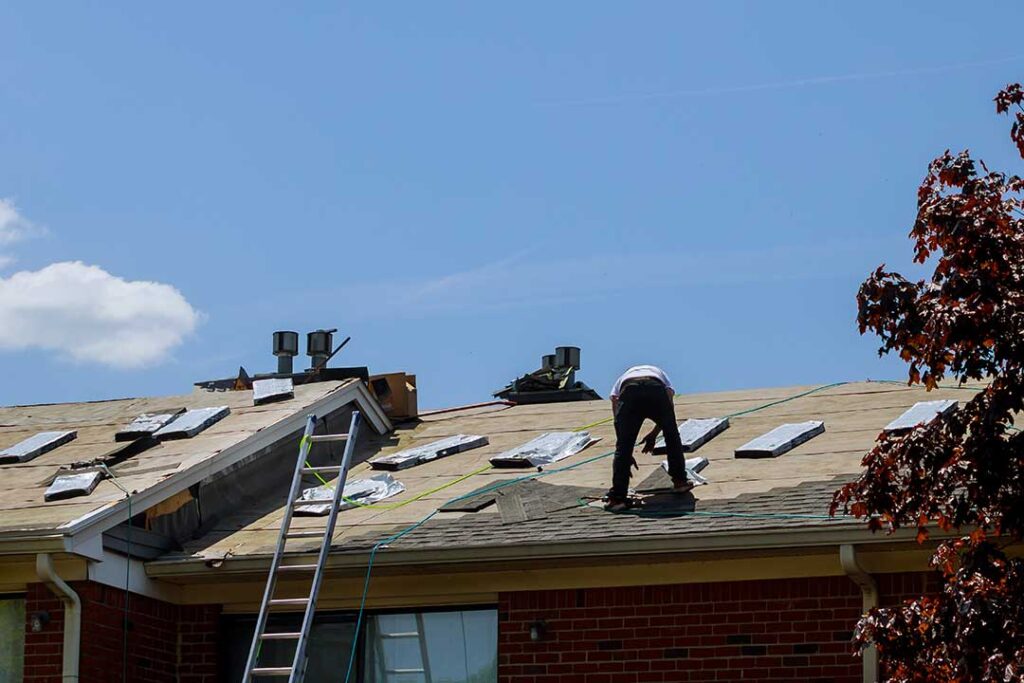
Removing leaves, twigs, pine needles, and other debris from a roof can help protect shingles, flashing, gutters, and drainage paths. For most homes, the safest approach is to remove light debris from the ground or from a firmly supported ladder without walking on the roof.
In Troy, NY, roof debris often builds up during autumn leaf fall, after windstorms, and around homes with mature trees. Winter can add another concern: wet leaves may freeze in place, while snow and ice can make even simple cleanup hazardous.
What debris should be removed from a roof?
Loose organic material should be removed when it begins collecting around roof features or holding moisture against the roofing surface. Common debris includes:
- Leaves and pine needles
- Small branches and twigs
- Seed pods, buds, and tree litter
- Windblown plastic or paper
- Moss, loose organic buildup, and bird nesting material
- Small amounts of gravel or granules that may have washed from older shingles
A few scattered leaves usually do not create an immediate problem. Larger accumulations can trap moisture, block drainage, stain roofing materials, and encourage moss or algae growth. Debris is especially concerning when it collects in roof valleys, behind chimneys, around skylights, or beside plumbing vent pipes.
Do not assume that all material on a roof is harmless. Broken shingles, exposed fasteners, damaged flashing, or unusual piles of granules may indicate a roof problem rather than ordinary litter.
Can roof debris be removed without climbing onto the roof?
Yes. Ground-level removal is usually the preferred method for light debris. A roof rake, soft-bristled roof brush, or telescoping pole can often reach lower roof areas from the ground.
Use slow, controlled strokes that pull material downward rather than forcing it across the roof. Avoid sharp scraping tools, metal rakes, and anything that can cut or puncture shingles. Asphalt shingles can lose protective granules if they are aggressively dragged or brushed.
Ground-level cleaning works best when:
- The debris is dry and loose
- The roof has a modest slope
- The tool can reach the affected area
- There are no overhead wires, unstable branches, or nearby obstacles
- Falling debris can land safely without striking people, vehicles, windows, or outdoor equipment
Do not stand directly below the work area. Small branches can fall farther than expected, and roof debris may contain nails, broken roofing pieces, or animal waste.
How should a ladder be used for roof-edge cleanup?
A ladder should be used only for limited work near the roof edge, not as a substitute for proper roof access. Set it on solid, level ground and keep the base clear of ice, mud, leaves, and other slippery material.
For an extension ladder:
- Place the base approximately one foot away from the wall for every four feet of ladder height.
- Extend the ladder at least three feet above the roof edge if it is being used for access.
- Keep both hands available while climbing whenever possible.
- Maintain three points of contact.
- Do not overreach sideways; climb down and reposition the ladder.
- Keep tools secured so they do not fall.
- Stay away from electrical lines and service connections.
Never place a ladder on top of a vehicle, box, unstable platform, or uneven pile of materials. Avoid using a ladder during rain, high wind, freezing conditions, or when rungs are wet or icy.
A person should not climb while carrying a rake, shovel, blower, or heavy bucket. Tools can shift the body’s balance, and a gust of wind can make a long-handled tool difficult to control.
Is it safe to walk on the roof to remove debris?
Walking on a roof is not safe for many homeowners, particularly when the surface is steep, wet, icy, moss-covered, brittle, or more than one story above the ground. Even a roof that appears gently sloped can become slippery from dew, frost, or decomposing leaves.
Roof surfaces may also hide hazards such as:
- Skylights or roof openings
- Loose shingles
- Soft decking beneath the roofing
- Unsecured cables
- Vent pipes and flashing
- Ice patches
- Areas weakened by leaks
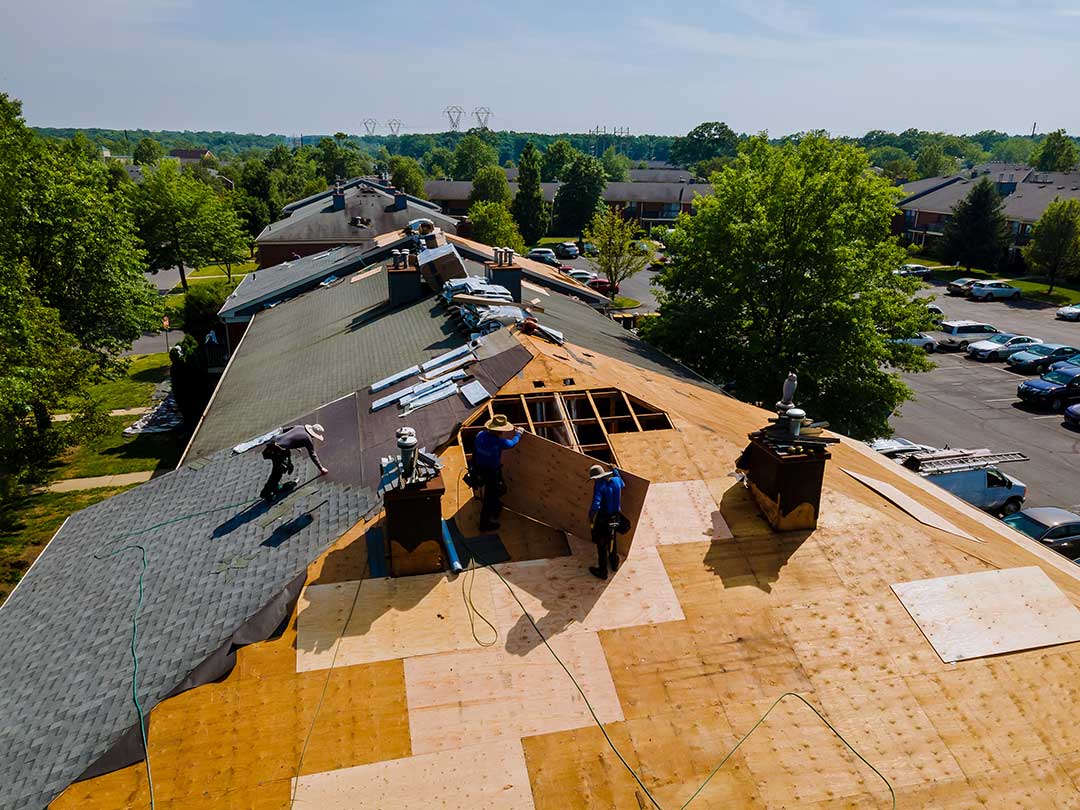
If debris cannot be reached safely from the ground or a stable access point, the task should not be treated as ordinary household cleaning. Fall protection, suitable footwear, secure access, and a plan for controlling falling material may be necessary.
Steep roofs, roofs with visible damage, and roofs covered with snow or ice should not be walked on for debris removal.
What is the safest way to remove wet leaves and branches?
Wet leaves are heavier than dry leaves and can cling to shingles. They may also conceal damaged roofing or sharp objects. Use a soft roof brush or rake from a safe position, pulling material toward the eave in small amounts.
Do not push a large, wet mass over the roof edge at once. It can strike someone below, overload gutters, or pull against shingles and flashing. If branches are caught under other materials, do not yank them forcefully. A lodged branch may be connected to damaged roofing or may fall unpredictably when released.
Large limbs, storm-damaged trees, and debris near electrical lines require added caution. Keep people away from the drop zone until the area is safe.
Should a leaf blower be used on shingles?
A leaf blower can remove light, dry debris from some roofs, but it should be used carefully. Strong airflow may loosen granules, lift damaged shingles, or blow debris into gutters, attic vents, neighboring areas, and windows.
If using a blower from the ground:
- Use the lowest effective setting.
- Direct airflow away from people, vehicles, and windows.
- Avoid blowing debris toward roof valleys or vents.
- Do not use it during windy conditions.
- Never climb onto a roof solely to operate the blower.
A blower does not remove stuck moss, wet leaf mats, or compacted material effectively. Repeated aggressive blowing can cause more harm than the debris itself.
What should be checked after debris is removed?
Once the loose material is gone, inspect the roof from the ground with binoculars if needed. Look for missing, lifted, cracked, or curled shingles; damaged flashing; sagging rooflines; clogged gutters; and piles of granules near downspouts.
Inside the attic or upper floors, watch for water stains, damp insulation, musty odors, or daylight visible through the roof sheathing. A small roof leak may not appear directly below the damaged area because water can travel along framing.
Clean gutters and downspouts separately if debris has washed into them. Confirm that downspouts discharge water away from the foundation and that water is not backing up beneath roof edges.
How often should roof debris be removed in Troy?
The needed frequency depends on nearby trees, roof design, wind exposure, and seasonal conditions. Homes beneath mature trees may need attention several times during autumn. A check after major windstorms and before winter can help identify branches, clogged drainage paths, and damage before freezing weather arrives.
After snow melts, inspect for compressed leaf piles, broken branches, and areas where ice may have displaced roofing materials. Do not use a shovel or sharp tool to chip ice from shingles. The force can damage the roofing surface and underlying layers.
Debris removal is a small maintenance task only when the roof and weather conditions are manageable. If the roof is steep, icy, visibly damaged, difficult to access, or near power lines, avoiding the climb is the safest decision.
