
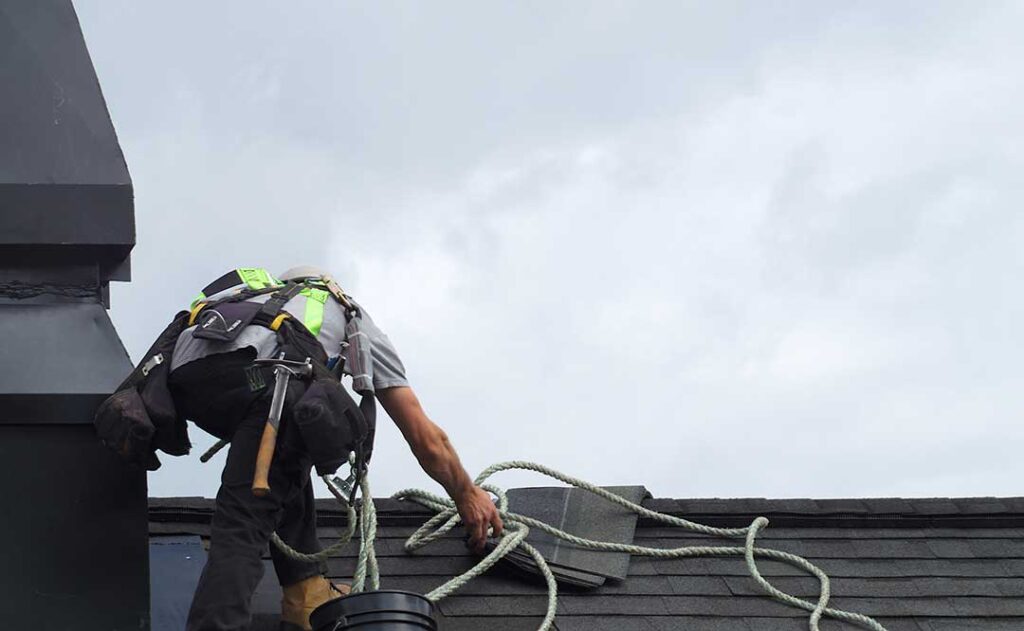
A roof leak should be treated as an active household problem, even if the dripping seems minor. Water can spread through ceilings, insulation, wall cavities, and electrical areas before the visible stain becomes much larger.
The safest response is to control the immediate damage, identify what is known without taking unnecessary risks, and document the condition before temporary repairs or permanent work begin.
What should be done first after finding a leak?
Move furniture, electronics, rugs, and other belongings away from the affected area. Place a bucket or container under the drip, but also protect the surrounding floor with towels, plastic sheeting, or a shallow tray.
If the ceiling is bulging, do not stand directly underneath it. A water-filled ceiling can become heavy and may collapse. Keep children and pets away from the area until the water source is controlled.
If water is near a light fixture, outlet, ceiling fan, appliance, or visible wiring, avoid touching the wet area. Turn off electricity to the affected circuit only if the electrical panel and surrounding area are dry and accessible. If there is any doubt, leave the area and arrange for an electrician or other qualified professional to address the hazard.
Should the water be shut off?
A roof leak and a plumbing leak can look similar indoors. Before assuming the roof is responsible, check whether the water appears near a bathroom, kitchen, laundry area, heating equipment, or attic plumbing.
A plumbing leak may continue during dry weather and can worsen when a fixture is used. A roof leak is more likely to appear during or after rain, melting snow, ice buildup, or heavy wind.
If a plumbing source is suspected, stop using nearby fixtures and shut off the appropriate water supply if it can be done safely. If the leak is clearly related to weather, do not climb onto the roof during rain, snow, strong wind, or icy conditions.
How can the source be located safely?
The visible stain is not always directly below the roof opening. Water can travel along rafters, roof decking, insulation, pipes, and ceiling framing before entering a room.
From inside the attic, if the space is dry and safely accessible, look for:
- Damp insulation or darkened wood
- Water trails on the underside of the roof deck
- Light visible through a roof penetration
- Wet areas around chimneys, vents, skylights, and roof edges
- Moisture near valleys or places where roof sections meet
Do not step directly on attic insulation or drywall. Use stable framing designed to support weight, and do not enter an attic if the access area is wet, poorly lit, extremely hot, or difficult to navigate.
From the ground, binoculars may help identify missing shingles, displaced metal, damaged flashing, sagging gutters, or debris impact. A ground-level inspection is safer than walking on a wet or snow-covered roof.
What temporary measures can help?
Temporary protection can limit damage, but it should not be mistaken for a permanent repair.
If the roof surface is dry and accessible only from a safe location, a properly placed waterproof cover may reduce additional water entry. It must be secured without creating a new hazard, and it should not block drainage paths or cover electrical equipment.
Do not rely on household caulk, tape, expanding foam, or interior paint to stop a roof leak. These materials may hide symptoms while water continues moving through the roof assembly.
Avoid climbing onto the roof to apply a patch during an active storm. Wet shingles, metal surfaces, ice, and wind create serious fall risks. In Troy, winter conditions can include snow, freezing temperatures, and repeated freeze-thaw cycles, all of which can make a roof appear stable while its surface is dangerously slippery.
Why do leaks often appear after snow or ice?
Snow and ice can expose weak points that were not noticeable during dry weather. Ice may collect along colder roof edges, especially where attic insulation or ventilation is uneven. Meltwater can then back up beneath roofing materials and enter through seams or flashing.
A leak that appears during thawing does not necessarily mean the entire roof is failing. Possible entry points include:
- Roof-to-wall transitions
- Chimney or vent flashing
- Valleys where water concentrates
- Damaged shingles or exposed fasteners
- Clogged or overflowing gutters
- Areas affected by falling branches or wind
Removing snow or ice from a roof can be dangerous and can damage shingles, flashing, gutters, or the roof deck. Roof work during winter should be limited to conditions where safe access and proper equipment are available.
What should be documented?
Take clear photographs of the ceiling stain, active dripping, damaged belongings, attic conditions, and any visible exterior damage. Write down:
- The date and time the leak was noticed
- Whether it followed rain, snow, thawing, or high wind
- Which rooms or levels were affected
- Whether the leak changes when plumbing fixtures are used
- What temporary steps were taken
- Any ceiling, wall, insulation, flooring, or electrical damage
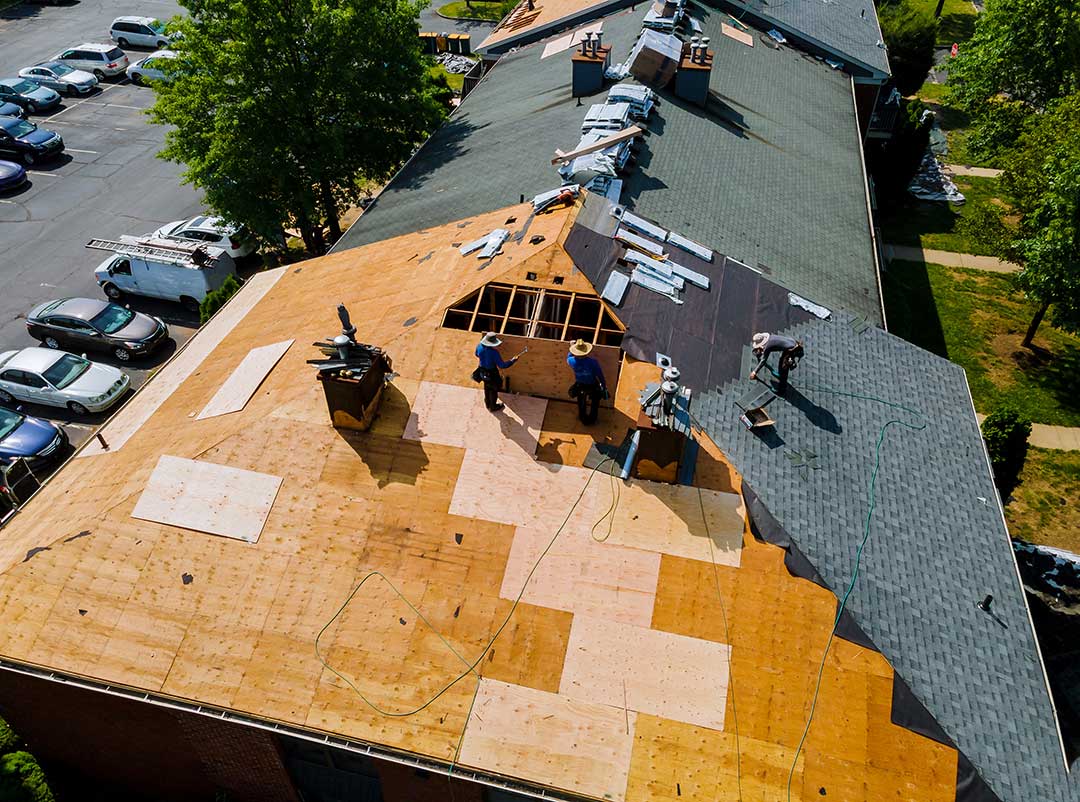
Documentation helps distinguish a roof leak from a plumbing problem and creates a useful record for property maintenance or an insurance inquiry. Do not discard damaged materials before photographing them, unless they pose a health or safety risk.
When is a leak an emergency?
Immediate attention is warranted when water is near electricity, the ceiling is sagging, the roof structure appears damaged, or water is entering rapidly. A strong musty odor, visible mold growth, sewage-like water, or widespread wet insulation also requires prompt action.
Leave the area if there are signs of structural instability, such as cracking drywall, separating ceiling joints, sagging roof lines, or movement in the ceiling. Do not try to support a bulging ceiling from below.
A small stain still deserves investigation, but not every leak requires the same response. A single drip after a passing storm may reflect a localized flashing issue, while recurring water after several weather events may indicate a broader drainage, ventilation, or roofing-material problem.
What should not be done?
Several common reactions can make the damage worse:
- Do not walk on a wet, icy, or visibly damaged roof.
- Do not puncture a bulging ceiling unless directed by a qualified responder and the area is known to be free of electrical hazards.
- Do not seal the interior stain and assume the problem is solved.
- Do not pressure-wash, scrape, or aggressively clean wet roofing materials.
- Do not use a ladder on snow, ice, uneven ground, or unstable surfaces.
- Do not ignore a leak because it stops when the weather clears.
Water damage can continue after dripping ends. Insulation, wood framing, and drywall may remain damp for days, particularly in enclosed areas with limited air movement.
How quickly should the damaged area be dried?
Drying should begin as soon as the area is safe. Remove standing water, increase gentle air circulation, and use a dehumidifier when appropriate. Do not direct air across suspected mold, sewage-contaminated water, or areas near exposed wiring.
Wet drywall, insulation, and flooring may not dry adequately from the surface alone. Materials that remain damp can develop odor, staining, or microbial growth. The longer moisture remains trapped, the greater the chance that repairs will involve more than the original roof opening.
For homes with older construction, finished attics, dense wall cavities, or multiple roof layers, hidden moisture can be especially difficult to identify. A visible ceiling mark may represent only the final point where water became noticeable.
How can future leaks be reduced?
Regular observation is useful, especially after severe weather and seasonal changes. From the ground, look for damaged roof materials, loose flashing, overflowing gutters, or branches resting on the roof. Inside the attic or upper floors, watch for new stains, peeling paint, damp insulation, or musty odors.
Keeping gutters and downspouts clear can help water drain away from roof edges and walls. Tree branches that scrape roofing materials or hang over the house may also contribute to damage during wind and heavy snow.
The most useful habit is to investigate changes early. A faint stain, occasional drip, or damp attic corner is easier to understand before repeated storms, freezing temperatures, and interior moisture expand the affected area.
